 playtua
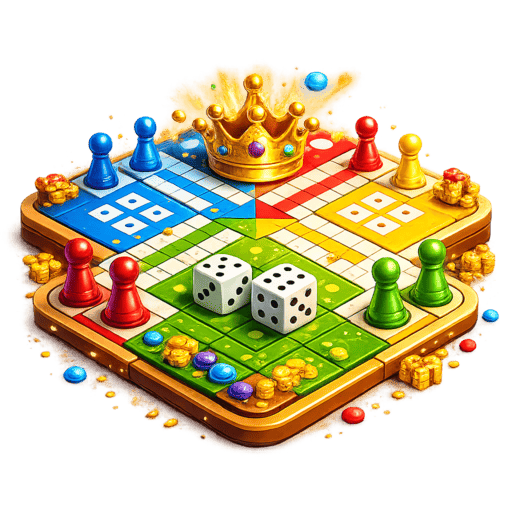
Ludo Strategy Guide: How to Win Every Game
Master Ludo with advanced strategies! Learn token management, blocking tactics, and probability-based decisions to dominate every game. Explore the topic in detail, discover related games and follow the links to keep learning. Whether you are choosing your next game or returning to a favourite, use this story as a starting point for a more enjoyable round.



Ludo is often dismissed as a "luck game" — just roll the dice and move. But experienced players know the truth: while you can't control the dice, you absolutely can control which token to move, when to take risks, and how to position for maximum advantage.
This guide covers the strategies that separate casual players from consistent winners.
Fundamental Principle: Spread Your Tokens
The single most important Ludo strategy is having multiple tokens on the board simultaneously. Here's why:
More options per roll — With 4 tokens out, every dice roll has 4 possible moves. With 1 token out, you're stuck with whatever the dice gives you.
Blocking potential — Multiple tokens create blocking opportunities against opponents.
Risk distribution — If one token gets captured, you still have others advancing.
Six utilization — Rolling a 6 is more valuable when you can choose which token benefits most.
Rule of thumb: Prioritize getting tokens out of base over advancing existing tokens, until you have at least 2-3 tokens on the board.
Token Selection Strategy
When you roll the dice, choosing which token to move is where strategy lives. Use this priority framework:
You can play this game for free on Android and iOS — no ads, no purchases required.
Priority 1: Capture Opponent Tokens
If any move allows you to land on an opponent's token, almost always take it. Captures send opponents back to base and give you a bonus roll. The compound advantage is enormous.
Priority 2: Move to Safe Squares
Stars and colored home columns are safe squares where you can't be captured. Moving a vulnerable token to safety is almost always correct.
Priority 3: Advance Your Lead Token
Your token closest to home should generally be advanced when possible — getting tokens home removes them from danger permanently.
Priority 4: Spread Over Stack
Avoid stacking tokens on the same square. Two tokens on one square means one dice roll moves both — bad for flexibility.
Priority 5: Block Opponent Paths
Position tokens on squares where opponents need to pass. Even if you can't capture, forcing opponents into suboptimal moves is valuable.
Advanced Tactics
The Blocking Formation
Place two of your tokens 1-6 squares apart on an opponent's path. This creates a "gauntlet" where no single dice roll lets them pass safely — they'll land on one of your tokens regardless.
The Safe Square Chain
Plan your moves to hop between safe squares (stars). This minimizes exposure to capture while steadily advancing toward home.
The Sacrifice Play
Sometimes it's worth leaving a token exposed to bait an opponent into a specific move. If they chase your sacrificial token, your other tokens advance uncontested.
Endgame: The Home Stretch
When a token enters the home column (colored stretch), it's completely safe. But you need exact rolls to enter home. Position tokens at different distances from home so multiple dice values are useful.
Dice Probability and Decision Making
Understanding dice probability improves every decision:
Key insight: Since you can't control what you roll, focus on creating board states where the maximum number of outcomes are favorable.
Common Mistakes
Mistake 1: Single Token Focus
Moving only one token while others sit in base. You're essentially playing with one option per roll instead of four.
Mistake 2: Ignoring Defense
Being so focused on advancing that you leave tokens on dangerous squares when safe alternatives exist.
Mistake 3: Emotional Captures
Chasing an opponent's token across the board when advancing a different token toward home is more valuable.
Mistake 4: Not Counting Squares
Failing to calculate whether an opponent can reach your token on their next turn. Always count the distance between your tokens and nearby opponents.
Mistake 5: Forgetting the Six Rule
When you roll a 6, you get a bonus roll. Use the 6 strategically — sometimes it's better to exit a new token from base than to advance an existing one.
Playing Against AI Difficulty Levels
On Playtua's Ludo King:
Easy AI — Makes random moves. Good for learning the board and practicing.
Medium AI — Uses basic strategy (captures when possible, moves to safety). Good for developing counter-strategies.
Hard AI — Uses advanced blocking, optimal token selection, and probability-based decisions. Genuinely challenging — winning consistently requires mastering the strategies in this guide.
See the full game collection or learn about Playtua's features.
Keep Reading
Similar Strategy Games
If you enjoy Ludo's strategic depth, try these:
Dots and Boxes — Abstract strategy with deep positional thinking
Tic Tac Toe — Perfect information strategy against AI
📱 Download Playtua — App Store · Google Play — Play Ludo King with no ads, completely free and offline.
Featured Games


FAQ
Is Ludo purely a game of luck?
What is the best opening strategy in Ludo?
More Articles
Download Playtua Free
50+ native 3D games, minimal ads, works offline. Go ad-free with Premium!
Download NowLearn a game from its own guide.
After “Ludo Strategy Guide: How to Win Every Game”, explore the game guides and collections behind the stories. The dedicated game guides explain objectives, touch controls and practical tips in one place. Use them alongside the articles when you want the details for a particular game.
Penguin Run guide
Learn lane changes, jumping and sliding, then follow the goal of reaching the end of the jungle track.
ExploreBlock Blast guide
Understand block placement, line clearing and the space you need to keep open for the next shape.
ExploreCar Racing guide
Read the steering controls and learn how traffic, speed and the finish-line objective fit together.
ExploreFind a collection for your next break.
Collections group games around a style of session, from a few spare minutes to a longer offline journey. Their descriptions help you compare ideas without committing to a particular genre.
Quick-break games
Discover picks for a spare moment, with clear objectives and a range of controls and challenge levels.
ExploreOffline travel
Explore games for journeys and places where a reliable connection may be unavailable.
ExploreBrain-training picks
Browse puzzles and strategy games built around patterns, planning and making thoughtful choices.
ExploreMore stories from the collection.
Continue with a practical guide or a closer look at a way to play. These articles connect specific games with the everyday moments in which you might enjoy them.
Car Racing tips
Read ideas for handling traffic and building a more consistent run in Car Racing.
ExploreOffline games
Explore the collection’s offline side and ideas for choosing games before your next journey.
ExploreGames for families
Read the parents’ guide to choosing games from the collection and exploring them together.
ExploreOne collection on iOS and Android.
Choose your device’s store to see current compatibility, installation details and available purchase options. All games currently remain playable without a subscription; Premium badges are labels only.
App Store
Open the iOS listing to check device compatibility and install Playtua on your supported Apple device.
ExploreGoogle Play
Open the Android listing to review compatibility and installation details for your phone or tablet.
ExploreFree and Premium
Play the collection free with ads, or review the optional ad-free subscription. The purchase screen shows the current local price and billing terms.
Explore